
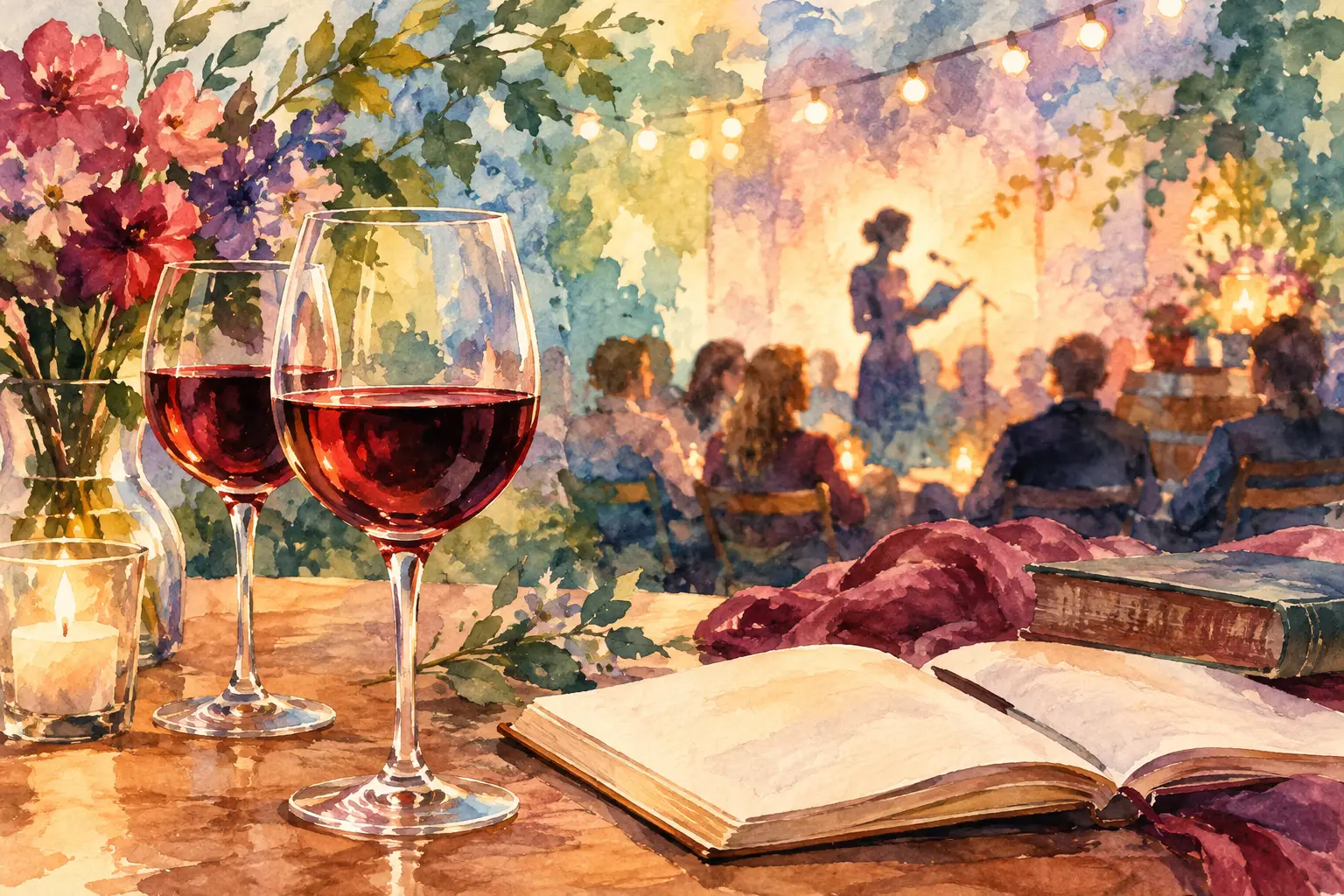
A bad poetry night can make a decent bottle of wine feel like a hostage negotiation. A good poetry and wine event does the opposite: it gives people permission to laugh too loudly, remember someone they should probably not text, and head home feeling slightly more alive than when they came in.
That does not happen because somebody put a few candles on a table and opened a Shiraz. It happens when the room is built for real human feeling: romance, regret, ageing, desire, foolish choices and the strange comedy of carrying on after your heart has had a good shit kicking.
What a Poetry and Wine Event Should Feel Like
The wine is not the main act. It is the social loosener. It gets people talking before the performance starts and gives them something to do with their hands when a poem wanders too close to home. Poetry is not the main act either, at least not in the highbrow, chin-stroking sense. The real event is recognition.
Someone hears a line about a marriage that went sideways, a first kiss that lasted longer in memory than it did in life, or the indignity of getting older with all the emotional confidence of a teenager in a borrowed car. They laugh. Then they go quiet. Then the person beside them gives their hand a squeeze. That is a night out.
For adult audiences, particularly those who have acquired a few stories and scars, the best spoken poetry is candid rather than ornamental. Nobody needs a lecture on metre after a long week. They want a voice with something at stake, a little rhythm, a little danger, and enough humour to stop the whole thing becoming a grief support group with cabernet.
Start With the Room, Not the Wine List
A poetry performance lives or dies by attention. Choose a venue where people can see the performer, hear every word and sit close enough to feel included. A small theatre, gallery, bookshop, community hall, vineyard room, restaurant back room or intimate arts space can all work beautifully. A cavernous hall with rattling cutlery, bright lights and a bar blender going every three minutes is less romantic.
Aim for warmth rather than fuss. Low lighting helps, provided the performer can still see their notes and the audience can find the loo without requiring a search party. Candles are lovely if the venue allows them. If it does not, soft lamps or battery lights can do the work without setting the place on fire. Romance is grand. Insurance claims are less poetic.
Seating matters more than organisers often realise. Cabaret tables suit wine and conversation, but avoid arranging guests in distant little islands. Keep the performance area close and clear. If the room is narrow, set chairs in a gentle arc. If tables are essential, make sure sightlines are not blocked by flower arrangements the size of small shrubs.
Give the Night a Shape
A poetry and wine event benefits from a simple rhythm. Let guests arrive, settle in and have their first glass before the performance begins. Then give the poems space. A short interval can work well for a longer show, especially if it lets people top up a drink, stretch their legs and talk about the line that caught them in the ribs.
Do not cram the programme with too many extras. A welcome, a reading, a raffle, a sponsor speech, a wine talk, a second reading, a long thank-you list and a door prize can turn an intimate evening into a committee meeting. Keep formalities brisk. The room came for a shared experience, not an endurance test.
A show such as Candles and Cheap Wine can run up to 90 minutes and be shaped around the host venue or programme. That flexibility matters. A festival slot may call for a taut 30-minute set. A community evening with a break may want more room for stories, laughs and the occasional emotional ambush.
Choose Wine With Common Sense
You do not need a sommelier in a velvet cape. Offer a red, a white and a good non-alcoholic option, then make the serving straightforward. The point is welcome, not a tasting exam.
A modest pour is often wiser than an unlimited bar. People need to hear the poems, remember the poems and ideally not heckle the poems. If food is offered, keep it easy to eat quietly: cheese, crackers, small savoury bites, fruit, perhaps something sweet. Avoid anything that requires a steak knife, an engineering degree or a noisy packet.
There is also no shame in making the wine secondary to the ticket price. Some audiences prefer to buy drinks separately; others appreciate one glass included. It depends on the venue, local licensing arrangements and the kind of evening you are hosting. The strongest choice is the one that keeps the booking clear and the audience comfortable.
Book a Performer Who Can Hold a Grown-Up Room
The difference between reading poetry and performing it is the difference between showing someone a map and taking them for a drive. A performer needs timing, presence and the nerve to let silence sit in the room without panicking and filling it with waffle.
Look for work that speaks to the audience you actually have. A retirement community, literary festival, fundraiser or neighbourhood arts venue may all welcome poetry, but not necessarily the same kind of poetry. Ask what the performance contains: humour, romance, storytelling, audience conversation, mature themes, strong language or material about heartbreak. Clear expectations help everyone relax.
This is particularly useful when programming for mixed generations. Adults do not all share the same appetite for edge. Some want tenderness. Some want a comic roast of love, lust and human stupidity. Most enjoy both, provided the performer earns the turn from laughter to ache.
A seasoned voice brings another advantage: lived experience cannot be faked for long. The best lines about disappointment are rarely written by somebody who has only met it in a metaphor. Mature performers can speak about ageing, longing and survival without turning them into greeting-card wisdom. They know the body keeps score, the heart keeps receipts, and life has a wicked sense of timing.
Let People Know This Is Not a School Assembly
Promotion should tell people how the evening will feel, not merely announce that poetry will occur at 7.30 pm. “An evening of poetry” may sound worthy to some and mildly alarming to others. Give them the emotional invitation instead.
Say that the night includes spoken word, laughter, romance, stories and poems for people who have loved badly, loved well or are still pretending not to care. Mention the wine, certainly, but lead with the experience. A guest should be able to picture themselves there: glass in hand, laughing with a friend, then suddenly hearing a line that follows them home.
Photographs should reflect the room you want to create. Show faces, closeness, a performer in the moment, warm light and people enjoying themselves. A lonely shot of a microphone stand is honest, perhaps, but it does not exactly shout, “Bring your favourite troublemaker.”
Protect the Quiet Moments
A good host sets the tone without becoming a headmaster. Ask guests to silence mobile phones before the performance. Keep late arrivals to a minimum. Arrange bar service around the reading where possible. These small courtesies tell the audience that the words are worth hearing.
Then trust the room. Not every poem requires applause on command. Not every serious moment needs rescuing with a joke. Let people respond naturally. The laughter will come when it comes. So will the hush.
At the end, leave a little unstructured time. People often want to speak to the performer, buy a book if one is available, meet someone new, or simply stand about with a final drink and look thoughtful. That lingering is not dead time. It is where the event becomes a memory rather than a programme item.
The best poetry and wine event does not ask anyone to become a poetry person. It reminds them that they already are a person with a history, a pulse, a few bruises and something worth raising a glass to.