
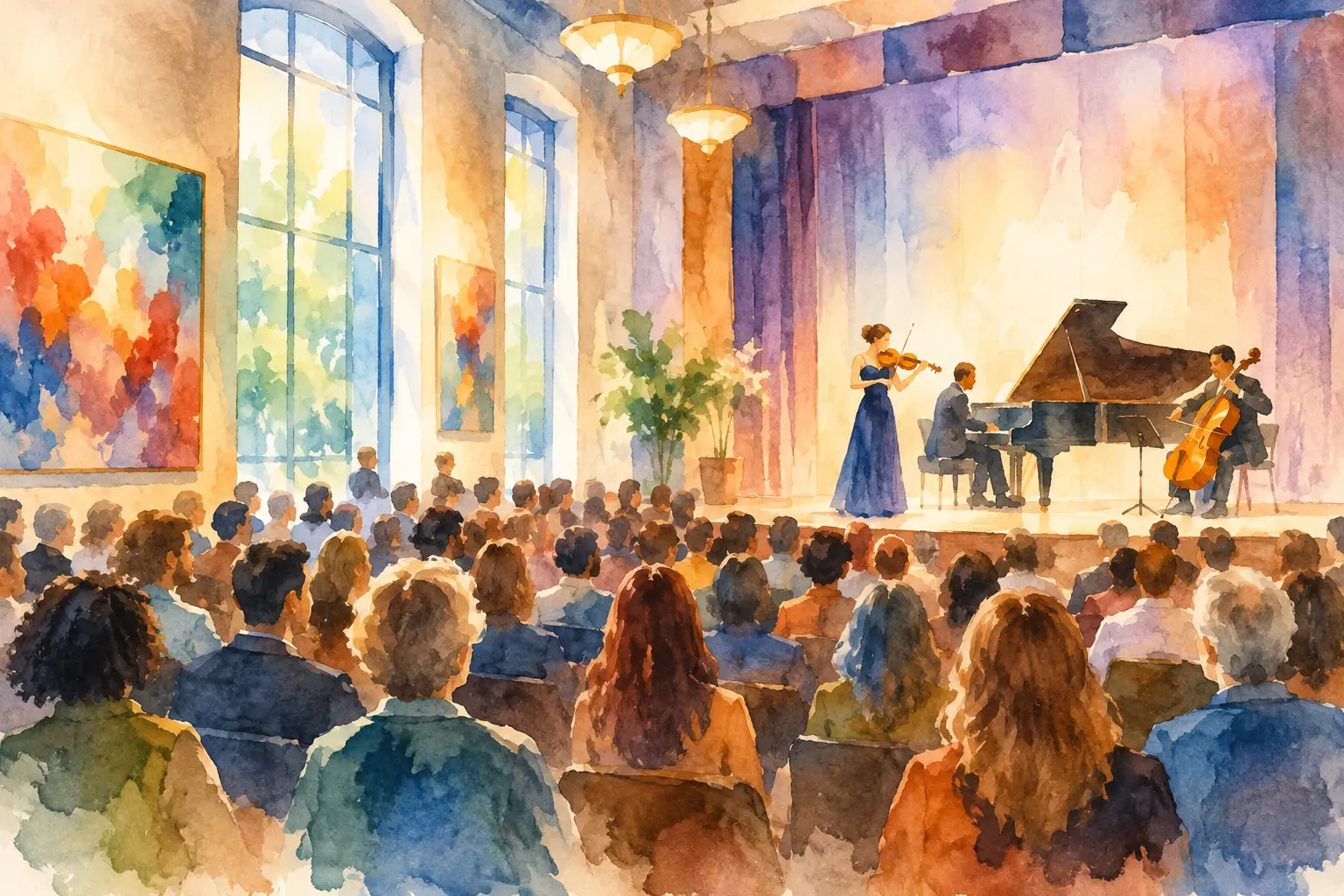
A half-empty room can make even brilliant work feel like it has arrived at the wrong address. Arts venue programme is not a matter of stuffing dates into a calendar and hoping the public fancies coming out on a wet Thursday. It is the craft of giving people a good reason to leave the sofa, pay attention and feel they were glad they did.
For smaller venues especially, the programme is the personality of the place. It tells people whether they can expect surprise, laughter, music, stories, a decent conversation at the interval, or an evening so stiff they worry about breathing at the wrong moment. The best programming does not chase every trend. It knows who is likely to walk through the door, then occasionally gives them something they did not know they needed.
Start with the room, not the brochure
A venue has its own temperament. A converted chapel, library hall, pub back room, gallery, community centre and 500-seat theatre may all host live performance, but they do not ask for the same kind of night.
Before booking, consider what the audience can comfortably do in that room. Can they sit close enough to catch a raised eyebrow? Is there a bar where people will happily linger afterwards? Does the space carry quiet words well, or does every sentence have to wrestle with a humming fridge and a badly behaved heating system? These details are not dull logistics. They shape the art.
An intimate spoken-word show can be electric in a room of sixty where everybody feels included. Put the same act in a vast hall with sparse seating and the atmosphere may go missing down the back. Conversely, a high-energy band needs room for noise, movement and a crowd that is not being told off for enjoying itself.
Good programme begins with a blunt question: what does this venue do naturally well? Not what it wishes it was, perhaps, but what it can honestly offer on a Tuesday night in February.
Capacity is not the same as atmosphere
A room that holds 150 does not need 150 people to feel successful. If the layout can be adjusted, an audience of 45 may feel busy, warm and properly engaged. Bring chairs in, soften the lighting, make the stage area intentional and let the room look like it expected company.
This matters for artists too. Performers can work with an intimate gathering. What is harder is performing to a sea of empty chairs that seem to be judging everyone involved.
Build arts venue programme around real people
Audiences are not a single creature called The Public. A retired couple who enjoy local history, a group of friends looking for a good night out, a serious theatregoer and somebody nursing a recently bruised heart may all be open to the same event, but they need different invitations.
The trick is to programme with a clear core audience in mind without becoming a private club. If your regular crowd is middle-aged and older, do not assume they only want nostalgia, tribute acts and afternoon tea with a string quartet. Many want work with teeth. They want to laugh at the mess of relationships, hear a story that recognises life has not gone according to plan, and see artists who speak like human beings rather than grant applications.
A balanced season might include familiar pleasures alongside a few calculated risks. The risk should be legible. If you book an unfamiliar performer, tell people what kind of experience they are buying: sharp storytelling, live music, comic poetry, a one-person show, or an evening of songs that make people sing badly but sincerely.
Mystery has its place. Confusion is not a marketing strategy.
Programme for contrast, not constant novelty
A strong programme has rhythm. If every event is loud, earnest, experimental or worthy, the diary becomes exhausting before anyone has bought a ticket. Contrast gives people reasons to return.
That can mean following a serious piece of theatre with a relaxed storytelling night, or placing a witty literary performance beside music and visual art rather than shunting all “word-based” events into one lonely corner. It can also mean varying start times, ticket prices and show lengths. Not every audience member wants to drive home at half past ten after a 90-minute show and a lengthy speech about the funding landscape.
There is no magic ratio of comedy to drama or local talent to touring work. It depends on the venue’s mission, budget and community. But a programme should have a pulse. People should be able to see a thread running through the season, even if they cannot predict every turn.
One useful test is this: could a regular describe your venue to a friend in one sentence? If the answer is, “Well, they put on all sorts,” you may have variety but no identity. If the answer is, “They bring in cracking live work for grown-ups who like to feel something and have a laugh,” you are getting somewhere.
Give local artists a proper place
Local programming is not charity, nor is it merely a cheap way to fill a gap. Artists rooted in the area can bring loyal audiences, useful collaborations and a sense that the venue belongs to more than visiting professionals passing through with a suitcase and a technical rider.
That said, local should not mean underprepared, underpaid or booked with no promotion because everybody knows them already. Treat local artists with the same clarity you would offer a touring act. Agree the fee, the running time, technical needs, access arrangements and who is responsible for publicity. A friendly relationship is not a substitute for a clear arrangement. It is how good relationships get ruined.
Pairing local voices with touring artists can work particularly well when there is a genuine connection between the work. A local musician opening for a storyteller, or a community poet sharing a short set before an established spoken-word performer, gives the audience a fuller evening without padding the bill for the sake of it.
Canada’s Senior Poet’s Candles and Cheap Wine, for instance, can run for up to 90 minutes and be shaped around a host’s programme. That kind of flexibility is useful, but it should still serve the evening rather than turn it into a grab bag. The strongest bills have a reason for being together.
Price with courage and kindness
Cheap tickets are not automatically accessible, and expensive tickets are not automatically sustainable. A £5 event that loses money every time may disappear altogether. A £35 ticket for an unfamiliar act may be a hard sell, however fine the poster looks.
Think about value rather than price alone. Does the ticket include a compelling full evening? Is there a concession for people on limited incomes? Could a pay-what-you-can allocation work for selected events? Would a season pass reward the people who keep showing up? The right answer depends on the audience and the venue’s finances, but the thinking should be deliberate.
Be plain about what people receive. If a performance is one hour without an interval, say so. If it is an adult-only show because the language is fruity and the heartbreak is not suitable for nine-year-olds, say that too. Nobody enjoys a nasty surprise at the box office, unless it is part of a very good magic act.
Market the feeling, then provide the facts
Most audiences do not buy tickets because a listing says “an innovative interdisciplinary exploration of contemporary concerns”. That phrase has sent many decent evenings quietly to their graves.
People buy because they can imagine themselves there. Describe the emotional weather of the event. Will they laugh? Will they hear a remarkable story? Will they recognise something of their own life? Then give the practical information cleanly: date, time, running length, ticket price, accessibility, content guidance and where the venue is.
Use an artist’s own language where possible. A performer who can describe their show in a few alive, specific sentences is doing half the work. Avoid sanding every event down into the same house style. A punk cabaret should not sound like a museum lecture, and a gentle afternoon recital should not sound as if it plans to set fire to the curtains.
Measure more than ticket sales
Ticket income matters. Pretending otherwise is a lovely way to close a venue. But it is not the only sign that an event worked.
Notice whether people stay to talk. Listen to what they say on the way out. Look at repeat attendance, mailing-list sign-ups, bar sales where relevant, artist feedback and the number of people who bring someone new next time. A modestly attended event that introduces a fresh audience to the venue can be worth more than a one-off sell-out with no lasting connection.
Keep records, but do not become a prisoner of spreadsheets. Numbers can tell you that 72 people attended. They cannot always tell you that three strangers stood in the foyer swapping stories about divorce, grief or the glorious foolishness of first love. That is often where a venue earns its real place in a community.
Make room for the unexpected
The programme should be dependable, but it should not be tidy to the point of boredom. Leave space for a late opportunity, a local partnership, an artist with an unusual proposition, or an event that is difficult to categorise but clearly alive.
Not every experiment will fill the room. Some will be a small disaster, complete with a malfunctioning microphone and an audience member who thinks their crisp packet is part of the soundtrack. That is live art. Learn what you can, pay people fairly, and book the next thing with a little more wisdom.
The useful question is not whether every event will please everybody. Nothing worth hearing does. Ask instead whether your venue is becoming a place where people feel welcome to be surprised, moved and mildly knocked sideways. Give them that often enough, and they will come back with a friend.