
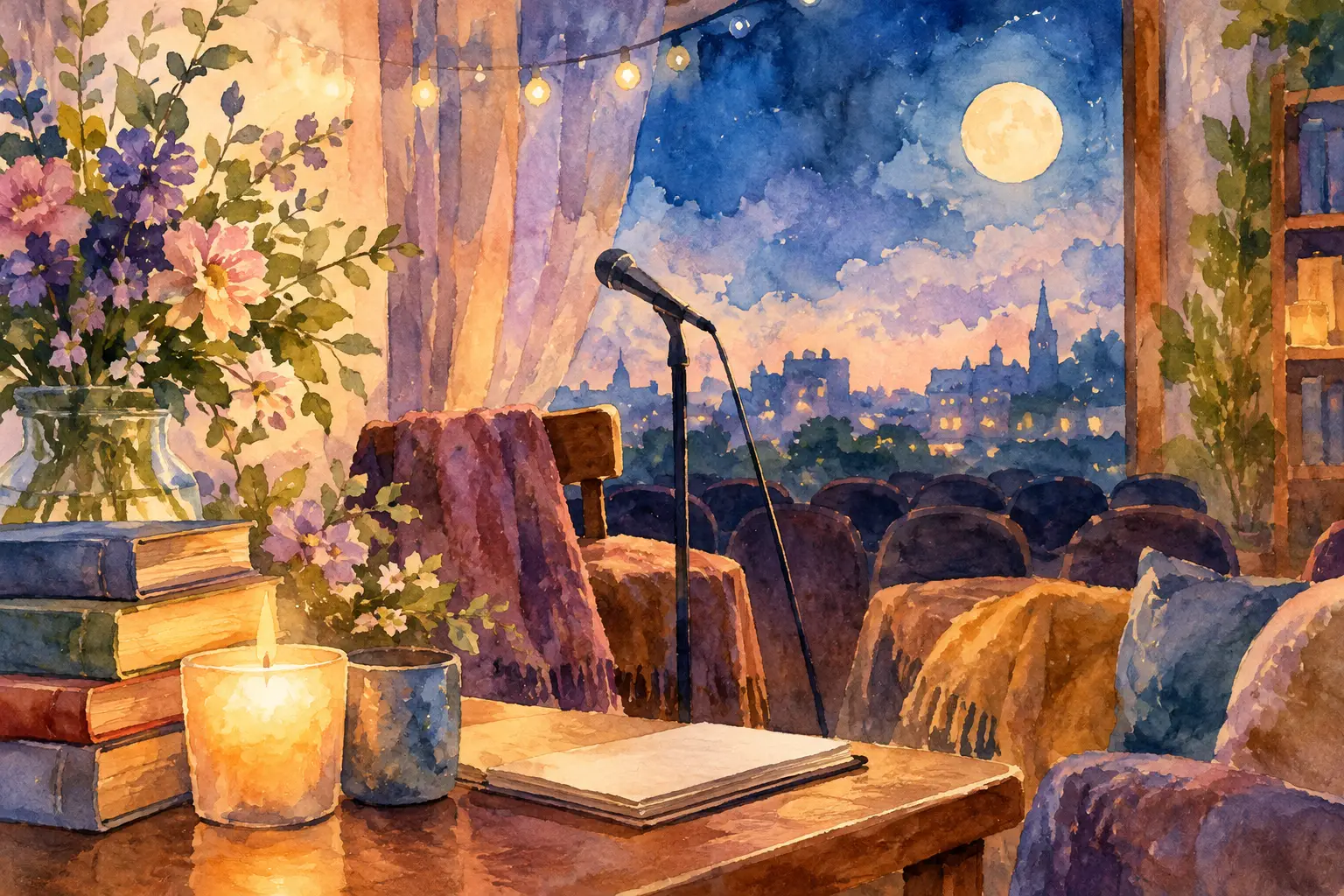
A decent poetry night is not a school assignment with worse lighting. It is a room full of grown people recognising themselves in somebody else’s bad decisions, old loves, private griefs and ridiculous hopes. The best poetry event ideas make space for that recognition. They give people permission to laugh, wince, raise a glass and sit quietly with a line that has caught them by the collar.
You do not need an academic crowd or a grand theatre. You need a clear reason for people to gather, a performer who can hold a room, and enough care in the details that the audience feels invited rather than examined. Poetry works beautifully when it is allowed to behave like live entertainment – intimate, unpredictable and a little bit dangerous.
Poetry Event Ideas That Give People Something to Feel
1. Hold a candlelit poetry and wine night
Candles and cheap wine are not merely decorations. They tell people, before the first word is spoken, that this will be an evening for adults with stories. Keep the light low enough for atmosphere but bright enough that nobody trips over a chair or mistakes the coat rack for their date.
A wine bar, bookshop, small gallery or community hall can all work. Offer wine, tea and non-alcoholic choices, then programme poems about love, regret, sex, ageing and the peculiar business of trying again. The trick is not to make it solemn. Heartbreak has always had room for a dirty joke.
2. Build a show around love after disappointment
Most adults have had their heart handed back to them in a carrier bag at least once. A themed evening about love after disappointment will draw people in because it is honest without being miserable.
Mix performed poetry with short audience stories, submitted anonymously beforehand or read by a host. Keep a firm editorial hand. The night should leave people lighter, not feeling as if they have attended a group counselling session without biscuits. Humour gives the sad material somewhere to breathe.
3. Pair poetry with live music, carefully
Music can lift spoken word into the rafters, but it can also sit on a poem like a large, well-meaning dog. Choose musicians who understand restraint: a guitarist, cellist, pianist or small jazz pairing is usually plenty.
Use music between sets or beneath selected pieces, not under every line. The words must remain the main event. A poem needs silence around it now and then, particularly when it has just said something the audience was hoping nobody would say out loud.
4. Make a supper club with poems between courses
A restaurant event works when the food and the performance are paced together rather than competing for attention. Start with a short welcome poem before the first course, place a livelier piece between mains and pudding, then finish with a longer, warmer set once coffee arrives.
Brief performances are best while plates are being cleared. Save the emotional heavy lifting for when cutlery has stopped clattering. This format suits couples, friendship groups and community supporters who may not buy a ticket for a formal reading but will happily come out for an evening with supper and soul.
5. Run a “poems we needed at 25” evening
This is an especially good fit for libraries, arts centres and community venues with a mixed-age crowd. Invite a mature poet to perform work that speaks to youth, foolishness, work, lust, parenthood, break-ups and the strange relief of no longer pretending to know everything.
The point is not to sneer at younger people or to announce that age brings wisdom. It mostly brings reading glasses and a longer list of things you should probably not text after midnight. The contrast between generations can make the evening funny, tender and surprisingly generous.
Poetry Event Ideas Need a Room, Not Just a Stage
6. Turn a bookshop into an after-hours listening room
Bookshops already come with shelves, quiet corners and people who are inclined to forgive a sentence for taking its time. Move a few tables, bring in proper chairs, sell tickets in advance and keep the crowd intimate.
A short interval helps people buy a book, have a drink and speak to the person next to them. That small social permission matters. Poetry audiences are often willing to talk after a show, provided nobody makes them explain symbolism before they have found their coat.
7. Offer an open mic with one experienced headliner
Open mics can be electric. They can also be twelve people reading directly from their phones while one man explains his divorce for fourteen minutes. A headliner gives the evening shape and reassures the audience that they will hear a polished performance as well as brave new voices.
Set clear rules: a three-minute limit, one poem per person in the first round, and no cruel material aimed at someone in the room. Put a warm, quick-witted host in charge. The host is not there to show off. They are there to keep the night moving and make every reader feel they have survived civilisation.
8. Put poetry in an unexpected local place
A heritage railway station, village hall, brewery, garden centre café, museum, hotel lounge or independent cinema foyer can become a fine venue. The location should add character, not hassle. If the room echoes like a municipal swimming pool, the poet will spend the night wrestling the acoustics instead of the human condition.
Choose a venue with comfortable seating, accessible toilets, a reliable sound system and somewhere to gather before and after. These practical bits are not glamorous, but they determine whether people return. Nobody remembers the tasteful bunting if they could not hear the third poem.
9. Create a “last call for love” late show
For a livelier crowd, stage a later performance with a cabaret feel. Think spoken word, a little music, dim lights and poems that acknowledge romance as the glorious mess it is. This suits fringe programmes, arts festivals and venues that want something more literary than a covers band but less stiff than a lecture.
Keep the running time tight, around 60 to 75 minutes, and make the content clear in the promotion. Adult themes are welcome when the audience knows what sort of evening it is buying. Surprises belong in poems, not ticket descriptions.
10. Invite the audience to bring one line
Ask ticket holders to bring a line that has stayed with them: a sentence from a letter, something their mother used to say, a scrap from a song, or their own accidental poetry. Collect the lines in a bowl and let the host or performer read a handful between sets.
Do not promise to analyse them. Simply let them land. This small act makes the crowd part of the evening without forcing anybody to stand under a spotlight and confess that Trevor from accounts still haunts their dreams.
11. Programme poetry for a seniors’ lunch or afternoon tea
Afternoon events deserve better than being treated as second-rate evening shows. For older audiences, a daytime poetry performance can be a proper occasion: good seating, clear sound, familiar refreshments and material that respects a lifetime of experience without becoming sentimental sludge.
An adaptable performer is vital. Some rooms want 30 minutes with conversation afterwards; others can happily take a full 90-minute show. Canada’s Senior Poet’s Candles and Cheap Wine is built for this sort of flexibility, with spoken poems that can bring laughter, romance and a frank look at life’s bruises to the programme.
12. End a community festival with a shared toast
A closing poetry event works well because people are already in the mood to gather and look back. Bring together a featured performer, a local musician and a few carefully chosen community readers. Keep the programme selective. A finale needs rhythm, not everybody who has ever written a limerick.
Finish with a toast, a final poem and a little time for people to linger. The best ending is not a standing ovation demanded by the host. It is the low buzz afterwards: strangers talking, friends laughing, someone repeating a line because it has got under their skin.
A Few Things That Make the Difference
Promotion should sell the feeling, not the form. “An evening of poetry” is accurate, but it does not tell anyone why they should leave the telly and put shoes on. Say whether the night is funny, romantic, raw, musical, candlelit or gloriously inappropriate for people who dislike being preached at.
Be equally plain about practicalities. Give the start time, finish time, accessibility details, ticket price and whether drinks or food are available. If the event contains adult language or themes, say so with confidence. You are not trying to please every person in the county. You are trying to fill a room with the right people.
Above all, choose poetry that sounds alive when spoken. A page can be beautiful, but a live room asks for rhythm, timing, eye contact and the nerve to let a silence sit there. Give people an evening where love has a few scars, laughter has decent timing, and nobody has to pretend their heart has not had a good kicking now and then.